Invaders Plan, The, by L. Ron Hubbard

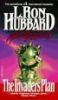
The Invaders Plan certainly was a disappointment after the expectations I'd developed from reading Battlefield Earth. It was a boring, predictable, and very long story told from the perspective of a simultaneously conniving and idiotic antagonist in a completely dystopian setting.
I can't imagine how or why this book and its nine sequels made the best-seller list. The characters are amongst the most unconvincing in any story I've read. The viewpoint character, as I mentioned, is a total idiot who has somehow managed to rise to a high rank in what amounts to the mafia wing of the government in this alien society, which on one hand is remarkably similar to Earth and on the other hand looks down at and scoffs Earth as primitive. He's the stereotypical unreliable narrator, only he's not well done. When the Dudley DoRight character suddenly walks in and the lecherous widow suddenly goes all weak in the knees, the evil viewpoint character becomes uncomfortable, thinking that he is the source of her twitterpation. Many such instances occur, in which he'd have to be an idiot not to see what's happening. At one point, he's making such a fool of himself that Dudley DoRight can't keep a straight face, and mister brilliant's take on it is that he's "Having a problem with his mouth", a deduction that he repeats no less than four times in two pages. Yes, we understand that what he's saying isn't the truth. Yes, we understand that this character is evil and cares nothing about anyone but himself. Where other authors approach the Unreliable Narrator with subtlety, L.Ron Hubbard hits you in the face with a sledgehammar, and then hits you a few more times for good measure.
Believe it or not, I actually read all the way through a sex scene without realizing that it was a sex scene until a character was putting on his pants. It doesn't help that the lecherous widow apparently has loud orgasms randomly throughout the day while going about ordinary daily tasks.
The protagonist, who oddly is not the main character, is everything that the viewpoint character is not. He immediately succeeds in any physical or mental task with no apparent effort, making deductions that would put Sherlock Holmes to shame and risking his life for the smallest good deed. Throughout the book, any character that meets him, however dispicable, immediately becomes his friend and turns over a new leaf. With the exception of our main character of course.
For once, I do NOT recommend this book. Spend your time doing something better, like washing dishes.
| 11/22/63, by Stephen King |  |
| A Memory of Light, by Robert Jordan and Brandon Sanderson |  |
| Academ's Fury, by Jim Butcher | |
| Acts of War: Flashpoint, by Aeryn Rudel |  |
| All You Need Is Kill, by Ryosuke Takeuchi |  |
| Altered Carbon, by Richard Morgan |  |
| Amber Spyglass, The, by Philip Pullman |  |
| American Gods, by Neil Gaiman |  |
| Amped, by Daniel H Wilson | |
| Anguished Dawn, The, by James P. Hogan | |
| Armada, by Ernest Cline | |
| Artemis, by Andy Weir | |
| Axis, by Robert Charles Wilson | |
| Batman: No Man's Land, by Greg Rucka | |
| Battle Circle, by Piers Anthony | |
| Battlefield Earth, by L. Ron Hubbard | |
| Beasts of Barakai, The, by Mickey Zucker Reichert | |
| Best of Lester Del Rey, by Lester Del Rey | |
| Black Monday, by Scott Reiss | |
| Blackout, by Mira Grant | |
| Blood Rites, by Jim Butcher | |
| Brief Cases, by Jim Butcher | |
| Brisingr, by Christopher Paolini | |
| Broken Angels, by Richard K. Morgan | |
| Captains Fury, by Jim Butcher | |
| Catch Me If You Can, by Frank Abagnale | |
| Caught in Crystal, by Patricia C. Wrede | |
| Cell, by Stephen King | |
| Changes, by Jim Butcher | |
| Children of Time, by Adrian Tchaikovsky |  |
| Clash of Kings, by George R. R. Martin | |
| Cold Days, by Jim Butcher | |
| Contact, by Carl Sagan | |
| Cordelia's Honor, by Lois McMaster Bujold | |
| Cradle of Saturn, by James P. Hogan | |
| Curious Incident of the Dog in the Night Time, The, by Mark Haddon | |
| Cursors Fury, by Jim Butcher | |
| Dance with Dragons, by George R. R. Martin | |
| Dark Convergence, by Dave Gross | |
| Daughter of the Sun, by Lonnie Ezell | |
| Dead Beat, by Jim Butcher | |
| Deadline, by Mira Grant | |
| Death Masks, by Jim Butcher | |
| Deception Point, by Dan Brown | |
| Decipher, by Stel Pavlou | |
| Digital Fortress, by Dan Brown | |
| Dragon and the George, The, by Gordon Dickson | |
| Dune, by Frank Herbert | |
| Eldest, by Christopher Paolini | |
| Eragon, by Christopher Paolini | |
| Existence, by David Brin | |
| Eye of the World, The, by Robert Jordan | |
| Feast For Crows, by George R.R. Martin | |
| Feed, by Mira Grant | |
| Feedback, by Mira Grant | |
| Fight Club, by Chunk Palahntuk. | |
| First Lords Fury, by Jim Butcher | |
| Flashforward, by Robert J. Sawyer | |
| Flightless Falcon, by Mickey Zucker Reichert | |
| Fool Moon, by Jim Butcher | |
| Footfall, by Larry Niven and Jerry Pournelle | |
| For The Win, by Cory Doctorow | |
| Forensic Files of Batman, by Doug Moench | |
| Foundation, by Isaac Asimov | |
| Frankenstein, Book One: Prodigal Son, by Dean Koontz | |
| Frankenstein, Book Two: City of Night, by Dean Koontz | |
| Frankenstein: Book Three: Dead and Alive, by Dean Koontz | |
| Furies of Calderon, by Jim Butcher | |
| Game of Thrones, by George R. R. Martin | |
| Gathering Storm, The, by Robert Jordan and Brandon Sanderson | |
| Genesis of Shannara: Armageddon's Children, by Terry Brooks | |
| Genesis of Shannara: Elves of Cintra, by Terry Brooks | |
| Ghost Story, by Jim Butcher | |
| Godslayer, by Mickey Zucker Reichert | |
| Golden Compass, The, by Philip Pullman | |
| Golden Son, by Pierce Brown | |
| Grave Peril, by Jim Butcher | |
| Great Train Robbery, by Michael Crichton | |
| Gypsy Morph, The, by Terry Brooks | |
| High Druid of Shannara Series, by Terry Brooks | |
| His Majesty's Dragon, by Naomi Novik | |
| Homeland, by Cory Doctorow | |
| I Am Legend, by Richard Matheson | |
| In God We Trust, by Jean Shepherd | |
| In Thunder Forged, by Ari Marmell | |
| Inheritance, by Christopher Paolini | |
| Into The Storm, by Larry Correia | |
| Into the Wild, by Larry Correia | |
| Invaders Plan, The, by L. Ron Hubbard |  |
| Invasive Species, by Joseph Wallace | |
| Jumper, by Steven Gould | |
| Jurassic Park, by Michael Crichton | |
| Kingdom Come, by Elliot S. Maggin, Mark Waid, Alex Ross | |
| Last of the Renshai, by Mickey Zucker Reichert | |
| Legend of Nightfall, The, by Mickey Zucker Reichert | |
| Legend That Was Earth, The, by James P. Hogan | |
| Leviathan Wakes, by James S. A. Corey | |
| Little Brother, by Cory Doctorow | |
| Live Free or Die, by John Ringo | |
| Magician King, The, by Lev Grossman | |
| Magicians Land, by Lev Grossman | |
| Magicians, The, by Lev Grossman | |
| Makers, by Cory Doctorow | |
| Map of Bones, by James Rollins | |
| Master of the Five Magics, by Lyndon Hardy | |
| Morning Star, by Pierce Brown | |
| Murder on the Orient Express, by Agatha Christie | |
| Name of the Wind, The, by Patrick Rothfuss | |
| Next, by Michael Crichton | |
| Nor Crystal Tears, by Alan Dean Foster | |
| Oathbringer, by Brandon Sanderson | |
| Old Man's War, by John Scalzi | |
| Paranormals, by Christopher Andrews | |
| Parasite, by Mira Grant | |
| Phylogenesis, by Alan Dean Foster | |
| Pirate Cinema, by Cory Doctorow | |
| Postman, The, by David Brin | |
| Prey, by Michael Crichton | |
| Princeps Fury, by Jim Butcher | |
| Proven Guilty, by Jim Butcher | |
| Ready Player One, by Ernest Cline | |
| Red Rising, by Pierce Brown | |
| Red Shirts, by John Scalzi | |
| Return of Nightfall, by Mickey Zucker Reichert | |
| RoboGenesis, by Daniel H. Wilson | |
| Robopocalypse, by Daniel H. Wilson | |
| Robot Uprisings, by Daniel H Wilson | |
| Runelords, by David Farland | |
| Secret of the 6th Magic, by Lyndon Hardy | |
| Seventh Son, by Orson Scott Card | |
| Shift, by Hugh Howey | |
| Side Jobs, by Jim Butcher | |
| Skin Game, by Jim Butcher | |
| Sleeping Dragon, The, by Joel Rosenberg | |
| Sleeping Giants, by Sylvain Neuvel | |
| Small Favor, by Jim Butcher | |
| Snow Crash, by Neal Stephenson | |
| Soon, I Will Be Invincible, by Austin Grossman | |
| Sovereign Era: Year One, by Matthew Wayne Selznick | |
| Spin, by Robert Charles Wilson | |
| Stand, The, by Stephen King | |
| Starship Troopers, by Robert Heinlein | |
| Starswarm, by Jerry Pournelle | |
| State of Fear, by Michael Crichton | |
| Storm Front, by Jim Butcher | |
| Storm of Swords, by George R.R. Martin | |
| Subtle Knife, The, by Philip Pullman | |
| Summer Knight, by Jim Butcher | |
| Sword of Shannara, by Terry Brooks | |
| Swords Against Deviltry, by Fritz Leiber | |
| The 4400: Promises Broken, by David Mack | |
| The 4400: The Vesuvius Prophecy, by Greg Cox | |
| The 4400: Welcome to Promise City, by Greg Cox | |
| The Blood of Kings, by Douglas Seacat | |
| The Circle, by Dave Eggers | |
| The Flash: Stop Motion, by Mark Schultz | |
| The Fold, by Peter Clines | |
| The Hive, by Chris Berman |  |
| The Mark of Caine, by Miles Holmes | |
| The Martian, by Andy Weir | |
| The Three-Body Problem, by Cixin Liu | |
| The Way of Caine, by Miles Holmes | |
| Time Travelers Wife, The, by Audrey Niffenegger | |
| Timescape, by Gregory Benford | |
| Towers of Midnight, by Robert Jordan and Brandon Sanderson | |
| Turn Coat, by Jim Butcher | |
| Twilight Eyes, by Dean Koontz | |
| Two Faces of Tomorrow, The, by James Hogan | |
| Uprooted, by Naomi Novik | |
| Waking Gods, by Sylvain Neuvel | |
| Way of Kings, The, by Brandon Sanderson | |
| White Night, by Jim Butcher | |
| Wild Cards, by George R.R. Martin | |
| Wise Man's Fear, by Patrick Rothfuss | |
| Wizard's First Rule, by Terry Goodkind | |
| Woken Furies, by Richard K. Morgan | |
| Wool, by Hugh Howey | |
| Words of Radiance, by Brandon Sanderson | |
| World War Z, by Max Brooks | |